McKinney's Firefighting Water Damage Specialists
Dry the Firefighting Water Before Mold Starts
Suppression water can hide under floors and behind walls, so drying should begin quickly after the property is cleared.
McKinney's Firefighting Water Damage Specialists
Suppression water can hide under floors and behind walls, so drying should begin quickly after the property is cleared.
Firefighters may use hundreds or thousands of gallons of water during a residential fire. Once the flames are out, that water can soak drywall, insulation, cabinets, subflooring, base plates, flooring systems, and contents.
In McKinney's slab-on-grade homes, water often moves laterally along flooring, under cabinets, and behind baseboards instead of draining into a basement. That makes moisture mapping important because a room can look dry while the wall cavity or flooring edge remains wet.
Water damage from firefighting is time-sensitive. Wet gypsum board loses strength, cabinet boxes swell, laminate flooring cups, and hidden moisture can turn into mold if drying is delayed during humid North Texas weather.
Mitigation after a fire must be coordinated with smoke cleanup and structural documentation. Removing wet material too quickly without photos can hurt the claim, but waiting too long can create preventable secondary damage.
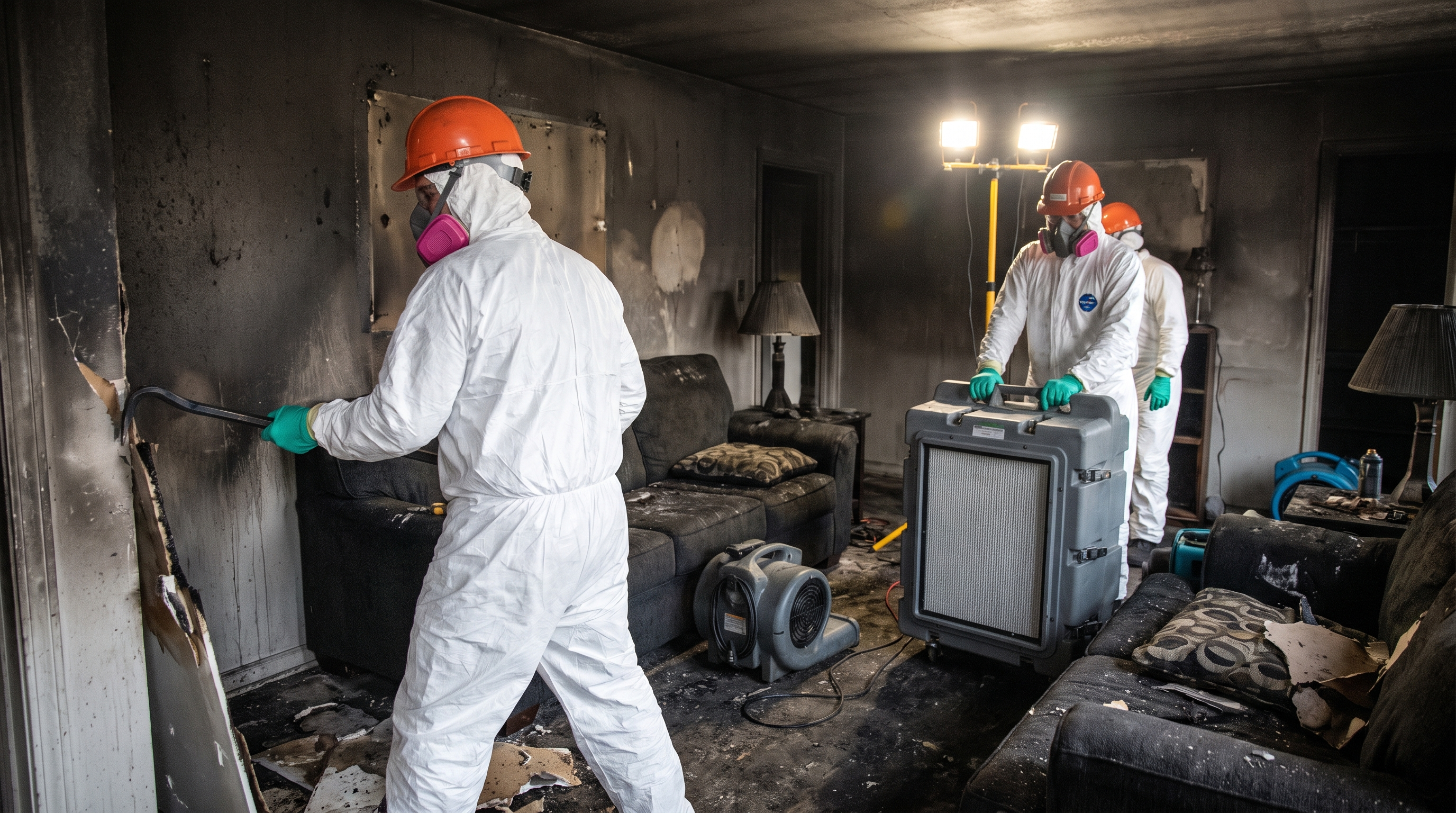
Fire-related water mitigation focuses on finding, extracting, drying, and documenting suppression water without disrupting the fire claim record.
Standing water and saturated materials are identified with visual inspection and moisture readings. Mapping helps determine where water traveled under floors, behind walls, and around slab edges.
Air movers, dehumidifiers, containment, and monitoring are used to dry salvageable areas. Equipment placement depends on material type, room layout, and the amount of smoke contamination present.
Wet drywall, insulation, cabinets, or flooring may need removal if drying cannot be achieved safely. The goal is to stop mold risk while preserving documentation for the insurance scope.
Firefighting water cannot be treated like a normal plumbing leak because smoke, soot, debris, and structural damage may be involved. The mitigation plan has to protect both the building and the claim.
Many McKinney-area homes sit on concrete slabs, where moisture can collect along perimeter walls, cabinets, flooring transitions, and base plates. Those areas need targeted readings and follow-up checks.

Ask for water mitigation as soon as the structure is safe to enter.
Free — no obligations
Locate wet rooms, wall cavities, flooring, cabinets, insulation, and contents affected by firefighting water.
Photograph and record water-damaged materials so the insurance file reflects the full loss.
Remove standing water, set drying equipment, and monitor moisture levels until salvageable materials reach drying goals.
Check for swelling, delamination, odor, microbial risk, and materials that need replacement instead of drying.